What is the Baltic Youth Innovation Lab on AI & Media?
The Baltic Youth Innovation Lab on AI & Media is an international educational programme bringing together young journalists, media experts, and partner organisations to explore how artificial intelligence is transforming journalism and media practices.
Over five intensive days in Riga, participants will combine theory with hands-on experimentation, collaboration, and networking, focusing on innovation, ethics, and the future role of media in a rapidly changing digital landscape.
How artificial intelligence tools are already shaping newsroom workflows, content creation, verification, and storytelling - and what this means for the future of journalism.
Critical discussions and practical work on media ethics, responsible AI use, innovation culture, and the role of young journalists in shaping trustworthy and sustainable media.
Ethics • Power • Democracy • Journalism • Innovation •
Ethics • Power • Democracy • Journalism • Innovation •
Ethics • Power • Democracy • Journalism • Innovation •
Guided by expert practitioners in journalism, democracy, and AI tools.
Journalism & Democracy
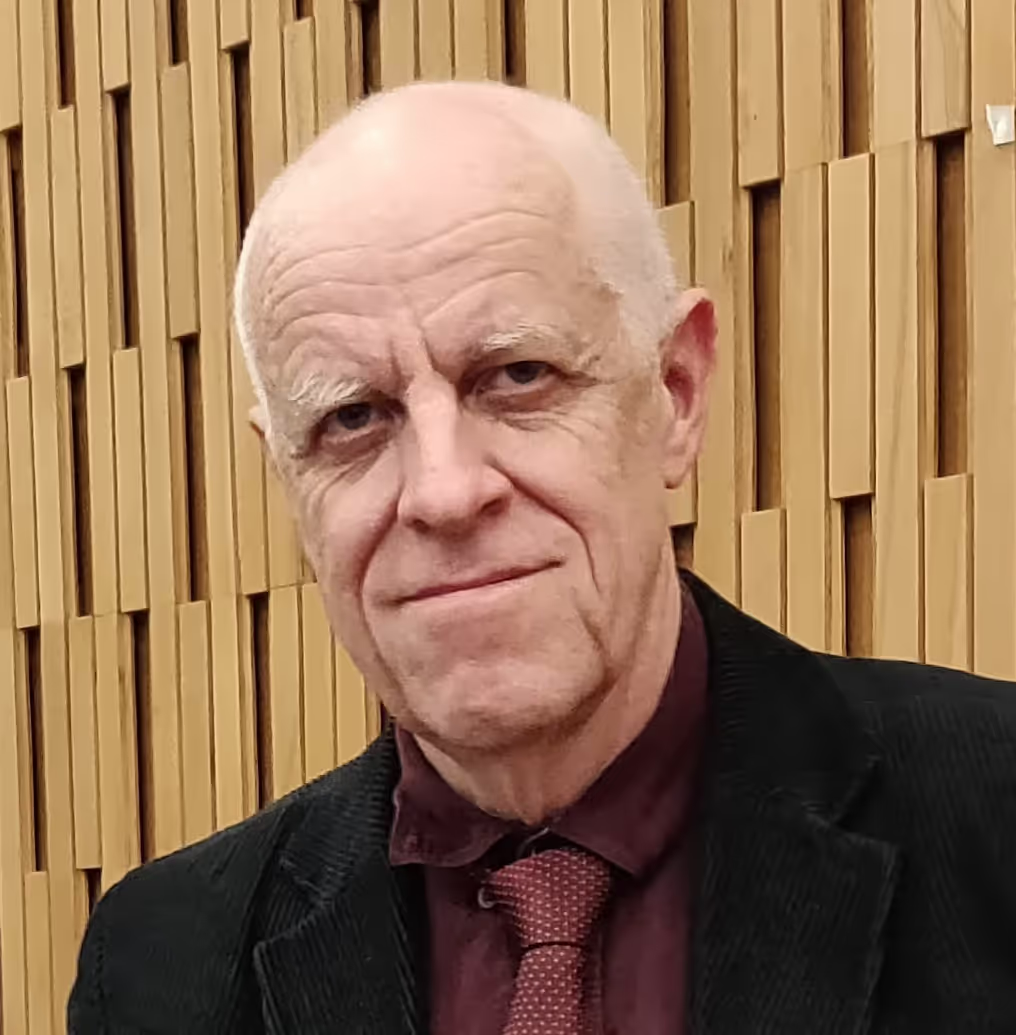
International media advisor and former President of the European Federation of Journalists.
Media Strategist
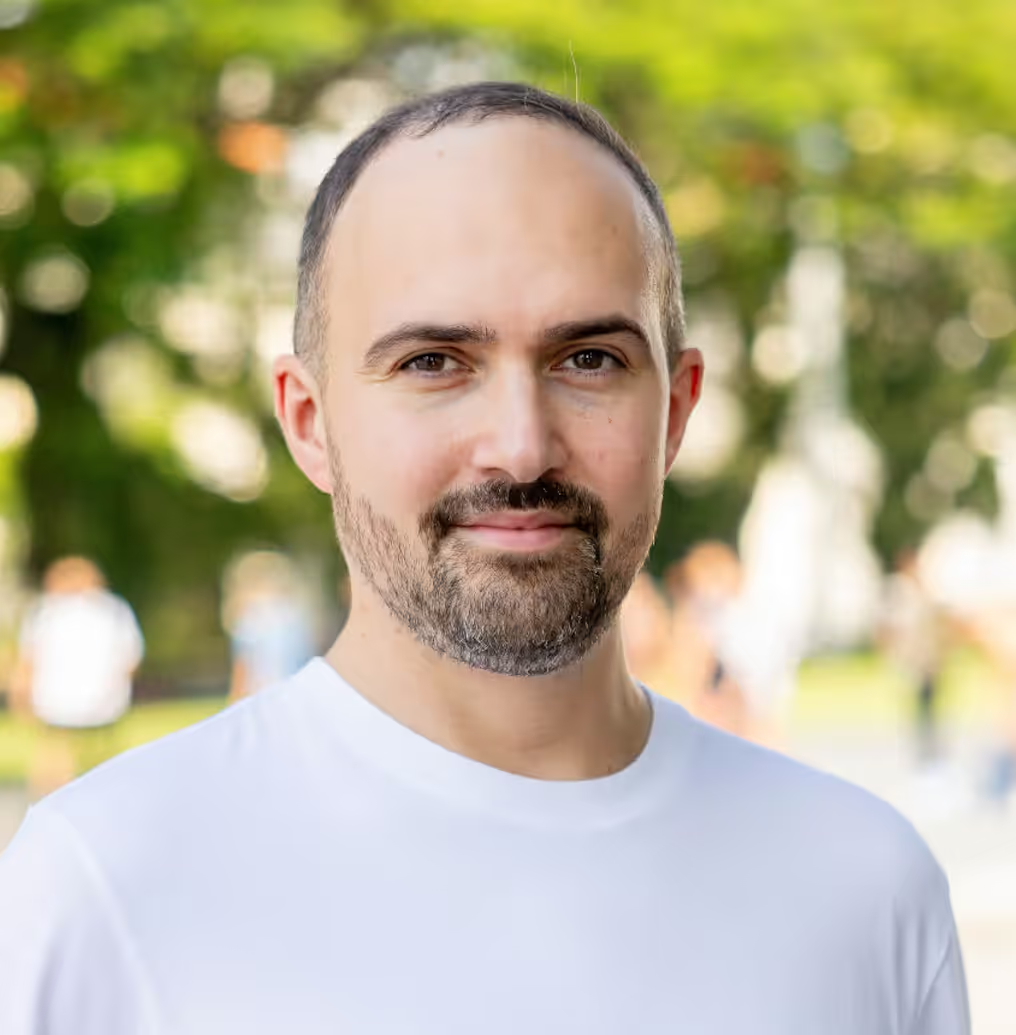
Media innovation strategist advancing agile, sustainable journalism worldwide.
International Relations Scholar
Political scientist and cultural diplomacy leader focused on foreign policy and Baltic-Nordic cooperation.

AI & Digital Innovation Leader
Artificial intelligence expert driving digital transformation and advancing tech capability across organizations.

Expert partners and mentors supporting the programme with experience in journalism, democracy, AI tools, and media innovation.


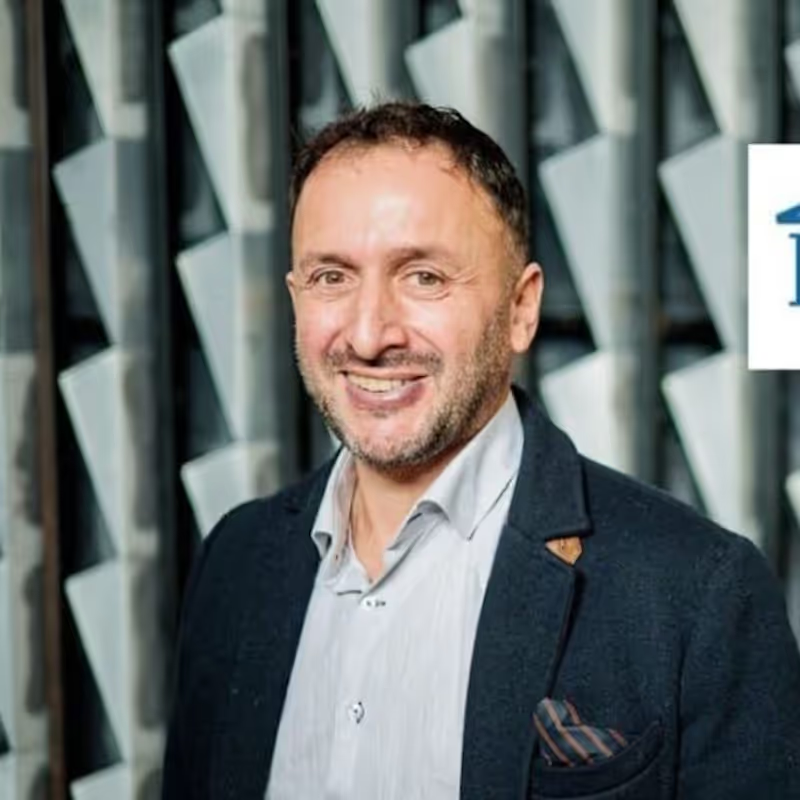
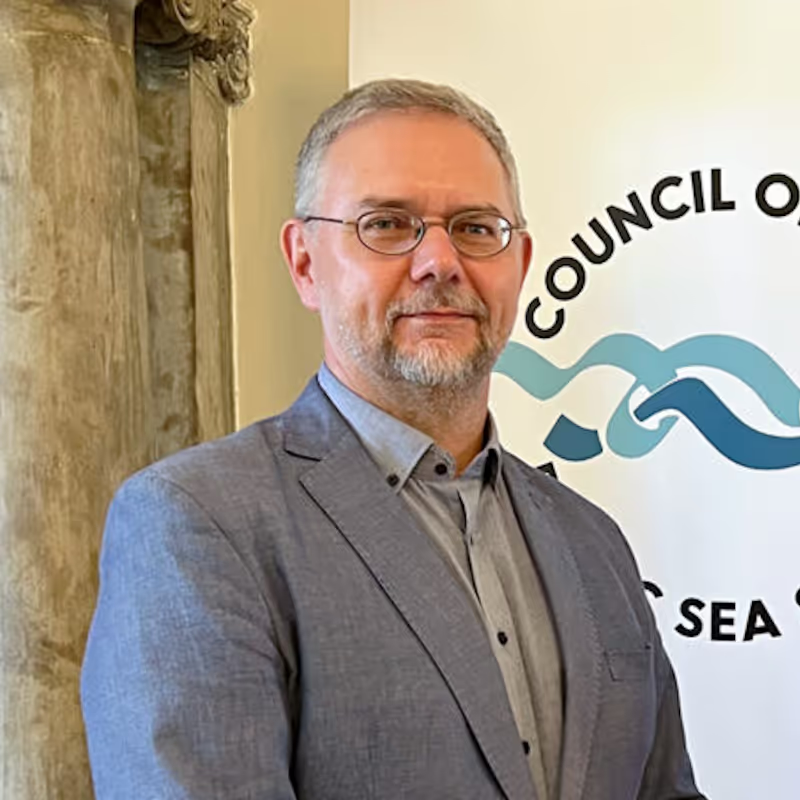

Experienced leaders in community-building, civic engagement, and emerging technologies.
Programme Manager
AI strategist and IT leader empowering organizations to unlock the full potential of AI through strategy, training, and community building.
Project Manager
A media development leader advancing independent journalism through global partnerships and strategic, community-driven programs.

Ethics • Power • Democracy • Journalism • Innovation •
Ethics • Power • Democracy • Journalism • Innovation •
Ethics • Power • Democracy • Journalism • Innovation •
Meet the talented students, expert lecturers, and partner organizations making the Baltic Youth Innovation Lab on AI & Media a truly collaborative and inspiring experience. Together, they create a space to explore innovation, AI applications in journalism, and cross-cultural collaboration.
25 students aged 19 - 24 from Denmark, Lithuania, Estonia, Latvia, and Finland will take part in this lab. They bring diverse perspectives, academic backgrounds, and a passion for journalism.
Participants will actively contribute to group projects, engage in discussions, and experiment with AI tools for media innovation. This immersive experience is designed to help them develop professional skills, build cross-cultural networks, and explore new approaches to storytelling in the digital age.
4 lecturers from Denmark, Latvia, and the UK bring a wealth of experience in journalism, AI applications, and media innovation. They will deliver lectures, lead workshops, and mentor students throughout the lab.
Their guidance will help participants navigate complex media challenges, experiment with emerging technologies, and refine practical skills in investigative reporting, content creation, and ethical decision-making in AI-driven journalism.
Representatives from six partner organizations support the lab by sharing professional expertise, providing mentorship, and facilitating networking opportunities.
The partners include:
Their involvement ensures participants gain insight into international media practices, ethical journalism standards, and strategies for innovation in an ever-changing media landscape.

Exploring AI tools and new media approaches.

Working effectively in diverse international teams

Embracing new ideas, tools, and ways of working

Responsible journalism in an AI-driven world
Journalism students
lecturers
partner representatives
Essential information on travel, venue, accommodation, and daily logistics for participants attending the programme in Riga.

Any and all participants must carry a valid form of identification and must have valid visas or travel permits.
Participants will arrive in Riga on Thursday, 7 May 2026. Flights are arranged for participants from Denmark and Finland, while bus transportation is organised for participants from Estonia and Lithuania.
To travel from Riga Airport to the city centre, participants are recommended to take Bus No. 22 to “Autoosta” (Central Bus Station). From there, Elizabetes Street is a short walk away.

All programme activities will take place at Media Hub Riga, located at Merkela Street 21.
Start-up networking and preparation sessions will be held on Thursday, 7 May 2026.
The innovation lab will take place daily from 09:50 on Friday 8 May, Saturday 9 May, Sunday 10 May, and Monday 11 May.
Evenings are free, with selected social events organised for participants.

Accommodation in single rooms will be provided for participants from Denmark, Estonia, Lithuania, and Finland. Participants from countries mentioned will stay at Tallink Hotel Riga, located at Elizabetes Street 24, Riga.
Participants from Latvia are expected to stay at home.
All meals will be served at the venue.
Five days of lectures, discussions, and hands-on collaboration exploring the impact of artificial intelligence on journalism, media ethics, and democratic societies.


MAY 7, 2026

18:00 – 21:00
Participants get to know each other and build team spirit. The project vision and goals are introduced. Teams are formed.
Schedule
18:00 – 18:15 | Welcome – Good evening, welcome all together
18:15 – 21:00 | Activity: Intercultural kick-off – Connecting people, exploring
MAY 8, 2026
09:50 – 17:00
The focus is on democracy and the role of journalism. Participants explore key concepts through theory and discussion. Ideas are developed through brainstorming.
Schedule
09:50 – 10:00 | Good morning – All together
10:00 – 11:30 | Elizabeth Dubinka-Hushcha "Journalism Between Power and Truth: Ethics, Knowledge, and Democracy in a Fragmented World"
11:30 – 11:45 | Coffee Break
11:45 – 13:15 | DISCUSSION and group work: "Journalism Between Power and Truth: Ethics, Knowledge, and Democracy in a Fragmented World"
13:15 – 14:00 | Lunch Break
14:00 – 15:30 | Mogens Blicher Bjerregård "Journalism as Critical Infrastructure: Ethics, AI, and Democracy in a Polarized World"
15:30 – 15:45 | Coffee Break
15:45 – 17:00 | DISCUSSION and group work: "Defining media and journalism challenges that are present in the age of AI"
MAY 9, 2026
09:50 – 17:00
The day focuses on journalism in the age of AI. Participants discuss the impact of artificial intelligence on media and democracy. Critical thinking and responsibility are emphasized.
Schedule
09:50 – 10:00 | Good morning – All together
10:00 – 11:30 |Agate Ambulte "Insights into AI technologies and critical thinking"
11:30 – 11:45 | Coffee Break
11:45 – 13:15 | Tom Trewinnard "The Big Picture: AI and Media"
13:15 – 14:00 | Lunch Break
14:00 – 15:30 | Creative sparring – All groups meet with experts
15:30 – 15:45 | Coffee Break
15:45 – 17:00 | Activity – Creative concept development and testing
MAY 10, 2026
09:50 – 17:00
Participants develop and finalize their presentations. Ideas are structured and prepared for submission by the end of the day.
Schedule
09:50 – 10:00 | Good morning – All together
10:00 – 11:30 | DISCUSSION: Democracy in the age of AI
11:30 – 11:45 | Coffee Break
11:45 – 13:15 | Activity
13:15 – 14:00 | Lunch Break
14:00 – 15:30 | Activity
15:30 – 15:45 | Coffee Break
15:45 – 17:00 | Short presentation and work submission
MAY 11, 2026
09:50 – 13:00
Participants present their ideas. Feedback and discussion follow. The program concludes with feedback on ideas and awards.
Schedule
09:50 – 10:00 | Good morning – All together
10:00 – 11:30 | Student idea presentations
11:30 – 11:45 | Coffee Break
11:45 – 13:00 | Feedback on student presentations + discussion
Participants work in teams to develop and present an innovative AI-based prototype that addresses a real-world challenge in the media environment and demonstrates its potential impact.
Create a prototype that uses artificial intelligence to address one of the current challenges in the media field. The prototype should demonstrate an idea of how AI can improve the media environment, journalistic processes, or public media literacy.
Teams should choose one specific challenge and develop a prototype that demonstrates how AI can help improve the media environment, for example:
The prototype can be a digital tool, platform, interactive solution, campaign concept, visual model, or a demonstrable experiment that shows the principle of how the idea works and its potential impact.
The most important thing is to show:
Dive in, experiment, and connect with fellow young journalists from across Europe. Don’t miss your chance to shape the future of AI in journalism and have fun doing it!
This publication has been funded by the Council of the Baltic Sea States (CBSS) Project Support Facility (PSF).
The CBSS does not make any warranties with respect to the accuracy or completeness of the information in this publication. The views, findings, interpretations and conclusions expressed in the publication are those of the author(s) and do not necessarily represent the official position of the CBSS.

International Advisor
temporarytemporarytemporarytemporarytemporary
Press Freedom · Media Development · Authors’ Rights · Ethical Standards · Capacity Building · Scientific Freedom
Educated journalist and freelance international advisor focused on strengthening media organizations and supporting democratic media development. Expert in authors’ rights, self-regulation, and ethical standards, including combating hate speech and disinformation.
Consultant to the Nordic Journalist Centre and advisor on scientific freedom. For over three decades, he has worked to advance press freedom and journalists’ rights worldwide.
He chairs the European Centre for Press and Media Freedom, serves on the Danish UNESCO National Commission and UNESCO’s IPDC Media Council, and sits on the EFJ Authors’ Rights Expert Group and the board of IFRRO. He is the former President of the European Federation of Journalists (2013–2022) and the Danish Union of Journalists (1999–2015).
Media Strategist
temporarytemporarytemporarytemporarytemporary

Media Innovation · AI Strategy · Climate Journalism · Information Integrity · Newsroom Transformation
Tom drives creative change in news, media, and communications, helping institutions become more agile, proactive, and sustainable. He specializes in developing high-impact information products around emerging technologies and shaping data-driven business and editorial strategies.
At Fathm, he partners with global clients to launch brands and initiatives, build newsroom AI strategies, and measure journalism’s impact. In 2023, he co-founded Syli, leading its flagship climateXchange initiative to innovate climate reporting and engage new audiences.
Previously, Tom was Director of Programs at Meedan, where he created Check Global and co-founded Pop-Up Newsroom, contributing to major election misinformation initiatives including Verificado 2018. He has also led media sustainability and investigative reporting programs at the Stockholm School of Economics in Riga and serves as a Senior Fellow with the John Schofield Trust.
An experienced journalist and open-source investigator, his work has appeared in The Economist and the Huffington Post. He holds an MBA from the University of Arizona and a BA (Hons.) from the University of Manchester.
International Relations Scholar
temporarytemporarytemporarytemporarytemporary
International Relations · Foreign Policy Analysis · Cultural Diplomacy · Regional Cooperation · Academic Research · Intercultural Dialogue
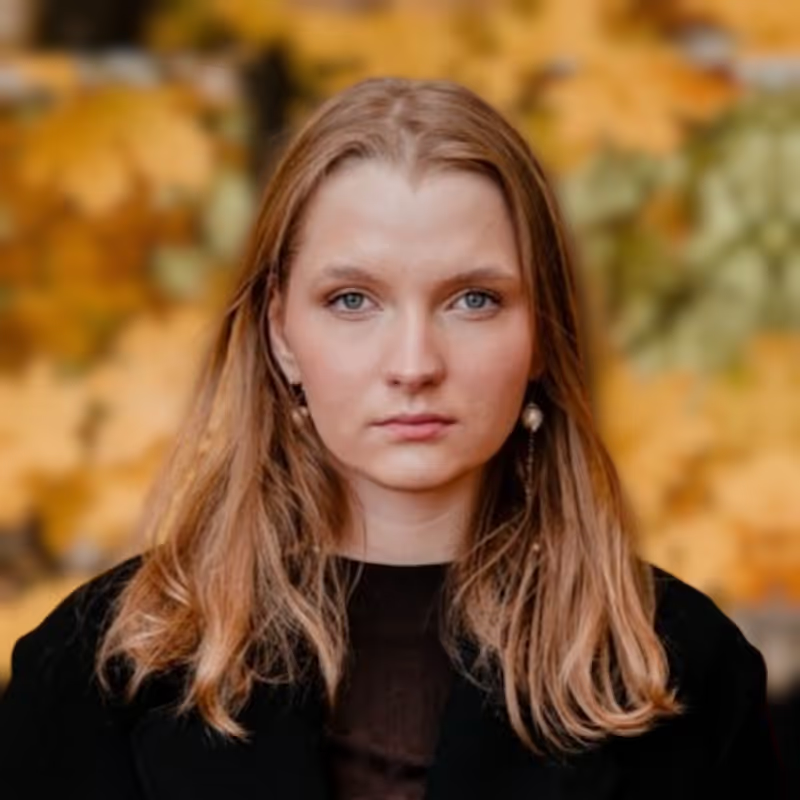
Elizabeth Dubinka-Hushcha is an international relations scholar and cultural diplomacy professional with extensive experience working across the Nordic and Baltic regions. Her work bridges research, policy, and cultural exchange, supporting initiatives that promote dialogue, strengthen regional partnerships, and connect institutions across borders.
She has held academic and research roles at European universities and participates actively in policy networks, conferences, and public discussions. Through her leadership in cultural cooperation programs, she develops projects that encourage collaboration between cultural, educational, and civil society actors, focusing on long-term engagement and meaningful international exchange.
AI & Digital Innovation Leader
temporarytemporarytemporarytemporarytemporary

AI Strategy · Digital Transformation · Technology Leadership · Generative AI · IT Governance · Digital Skills Development
Agate Ambulte is a technology and digital transformation specialist with leadership experience in advancing AI adoption and strengthening institutional innovation capacity. As head of AI initiatives at Riga Stradins University, she oversees strategic development of artificial intelligence applications, supports organizational readiness, and guides the integration of emerging technologies into academic and administrative processes.
Her work focuses on responsible and effective use of digital tools, including AI literacy, data-informed decision-making, and modern IT governance. Agate is also active in Latvia’s technology community, where she contributes to professional development programs and fosters collaboration among IT practitioners, educators, and industry stakeholders.
She is recognized for her analytical approach, clear communication, and commitment to strengthening digital competence across sectors through research, training, and institutional partnerships.
This session explores the vital role of free, reliable, and ethical journalism in safeguarding democracy amid growing polarization, disinformation, and rapid technological change. It addresses how emerging technologies—especially AI—are reshaping journalistic practices, highlighting the need for clear ethical standards, transparency, and accountability.
The discussion also examines the distinction between objectivity and neutrality, the importance of maintaining diverse and independent media ecosystems, and why journalism must be supported as critical infrastructure. Through presentations, discussions, and interactive group work, participants will engage with practical and ethical challenges facing modern journalism.
This session provides a theoretical and analytical framework for understanding journalism as a democratic institution operating within complex global power structures. It explores how media narratives shape political realities through concepts like securitisation, and how journalists navigate ethical responsibilities in increasingly polarised environments where democratic norms are contested.
The session also examines journalism’s role in mediating knowledge and expertise — particularly in science-driven debates such as climate change—focusing on maintaining credibility while avoiding misinformation and false balance. Through an interdisciplinary approach combining political theory, discourse analysis, and practical case studies, participants will engage in structured dialogue and collaborative work to translate complex ethical challenges into actionable tools for journalism, education and practice.